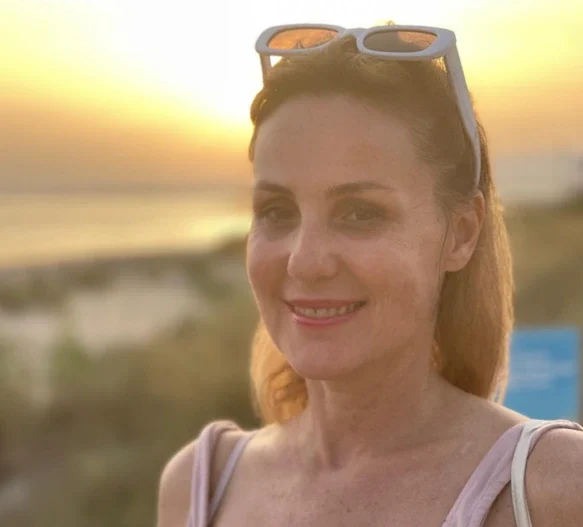
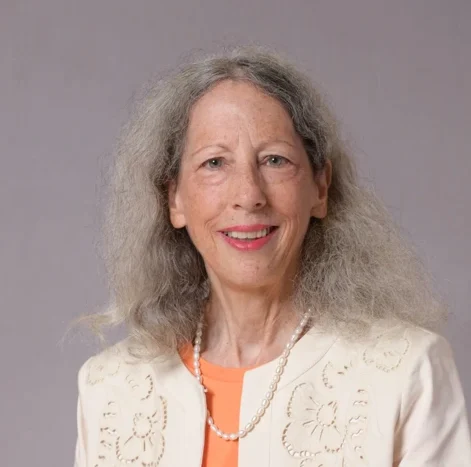
Joan Gillman: Nurturing Scientific Curiosity and Environmental Responsibility, One Generation at a Time
For Joan Gillman, science has never been confined to textbooks or classrooms. It has always been alive, observable, and deeply human. From early childhood experiments mixing household materials to carefully measuring snowfall in her backyard, her curiosity about how the world works was evident long before she chose teaching as a profession. That early sense of wonder, paired with a strong desire to build, create, and explore, would eventually shape a lifelong career devoted to science education and environmental leadership.
Today, as a Science Teacher at The Browning School, Joan Gillman stands as a steady force in education, known for her hands-on teaching style, her commitment to inclusivity, and her leadership in environmental awareness. With more than four decades in education, her journey reflects both consistency and evolution. She has remained grounded in the belief that science should be accessible, engaging, and empowering for every child, while continuously adapting her methods to meet the changing needs of students and society.
Her impact extends well beyond lesson plans. Through her classrooms, leadership of the Green Team, curriculum development, and national contributions to science education, she has shaped not only how students learn science, but also how they see their role in protecting the world around them.
A Leadership Philosophy Rooted in Curiosity and Care
Joan Gillman approaches leadership the same way she approaches teaching, with patience, clarity, and a deep respect for individual strengths. She views her classroom as a community of learners where every student has something valuable to contribute. This philosophy was shaped early in her career, beginning with volunteer work during high school, where she taught music, tutored math, organized playground games, and worked with children of varying abilities.
Those early experiences reinforced the importance of inclusiveness, a value that continues to guide her work today. She believes that every child deserves an opportunity to shine, regardless of academic level or learning style. In her classroom, questions are encouraged, curiosity is protected, and no student is made to feel small for needing clarification.
At The Browning School, she aligns her teaching with the institution’s guiding values of dignity, curiosity, purpose, and honesty. These values are not abstract concepts, but daily practices. Students are reminded that learning is a shared process, and respect for one another is essential. By creating an environment where students feel safe to explore ideas and make mistakes, she fosters confidence alongside knowledge.
Her leadership style is quiet but firm, driven by consistency rather than authority. She leads by example, showing students and colleagues alike that dedication, organization, and creativity can coexist with warmth and humor.
Innovation Through Hands-On Learning
Innovation, in Joan Gillman’s classroom, is not about novelty for its own sake. It is about making learning meaningful. Throughout her career, she has been a strong advocate for hands-on, experiential learning, a belief reinforced during her time as a student teacher at P.S. 47 Junior High School for the Deaf. There, she witnessed how complex scientific ideas became accessible when students were given opportunities to build, experiment, and apply concepts in tangible ways.
That lesson stayed with her. Whether teaching second graders or middle school students, she designs lessons that encourage exploration and problem-solving. One of her most well-known projects, the Straw Rocket unit, exemplifies her approach. Students are challenged to design rockets that travel the greatest distance, experimenting with variables such as mass, fin design, and launch angles. They collect data, analyze results, redesign their models, and test again.
“The learning does not stop with the first trial,” she has noted. “Students apply what they discover and improve their designs. That process stays with them.”
Her curriculum is intentionally interdisciplinary. Science lessons naturally incorporate math, writing, measurement, and critical thinking, reflecting how knowledge functions in the real world. She believes learning should not happen in isolation, and students should see how disciplines connect.
Creativity also plays a role. From science-themed performances to student-created public service announcements, she gives learners multiple ways to demonstrate understanding. There is no single path to success in her classroom, and that flexibility allows students to engage in ways that suit their strengths.
Navigating Challenges With Commitment and Adaptability
Over a long and varied career, Joan Gillman has faced challenges that tested her resolve and adaptability. Early on, while teaching in the South Bronx, she encountered classrooms with wide ranges in reading and academic levels. Rather than lowering expectations, she responded by differentiating instruction, running multiple learning levels, and committing fully to her students.
She recalls being asked whether she planned to stay the entire school year, a question that underscored the instability many students had experienced. Her response was simple but meaningful. She stayed, and she taught with purpose.
Later challenges were different but no less demanding. During the pandemic, she was tasked with transforming hands-on science into an online format. With thoughtful preparation, she turned her kitchen into a lab, communicated clearly with families, and ensured students could participate using everyday materials. Parents later shared how impressed they were by the level of engagement she maintained during remote learning.
Some moments were emotionally complex. Teaching during the Challenger disaster required sensitivity, honesty, and care. Explaining tragedy to young students reinforced her understanding of how deeply teachers influence children’s emotional and intellectual development.
Technological change also required adjustment. From chalkboards to SmartBoards, from paper notebooks to digital platforms, she embraced new tools not as replacements for teaching, but as enhancements. Today, she skillfully integrates age-appropriate platforms across grade levels while remaining thoughtful about emerging technologies, including artificial intelligence. She believes new tools must support learning without replacing essential skills like critical thinking and creativity.
A Vision for the Future of Education
Looking ahead, Joan Gillman sees education becoming increasingly interdisciplinary, student-centered, and environmentally focused. She believes that young people must be equipped not only with scientific knowledge, but also with the confidence to apply it responsibly.
Environmental education is central to that vision. As a leader of The Browning School’s Green Team, she empowers students to take meaningful action. Each week, students choose a Green Action, ranging from energy conservation to responsible recycling. They design signage, lead discussions, and present ideas to peers, turning awareness into daily habits.
Her goal is to address serious issues like climate change without overwhelming students. She emphasizes understanding over fear, action over anxiety. “Children need knowledge so they can make wise decisions as adults,” she has shared. “Even small changes can make a difference.”
Through community cleanups, conservation projects, and fundraising initiatives, students learn that leadership begins with participation. These experiences foster collaboration, empathy, and a sense of responsibility that extends beyond school walls.
She also envisions continued growth for herself, staying engaged through professional development, certifications, and collaboration with educators worldwide. Her belief is simple but powerful. To inspire students, teachers must remain learners themselves.
Measuring Impact Through Lives Changed
For Joan Gillman, success is measured not by accolades alone, but by the lasting impact on students. Former students who pursue careers in science, environmental advocacy, and research remain among her proudest achievements. She recalls one student whose interest in biology led to doctoral studies, a reminder that early encouragement can shape lifelong paths.
Her Green Team initiatives have also led to tangible outcomes. Students have raised thousands of dollars for clean water access and disaster relief, driven entirely by their own sense of purpose. These efforts reflect what she values most: young people using knowledge to help others.
She hopes her students leave her classroom eager to keep learning, curious about the world, and confident in their ability to contribute. “I want them to be lifelong learners,” she has said, “and good stewards of our planet.”
Beyond the classroom, her influence reaches educators nationwide. She has authored articles for respected journals, contributed to published curriculum books, led workshops at major conferences, and served in leadership roles within professional science organizations. Her work has been recognized by the International Association of Top Professionals, which named her Top Educator of the Year 2025 and selected her as one of its Top 25 Global Impact Leaders. She is also scheduled to receive the association’s Lifetime Achievement Award in 2026, along with the distinction of Top Educator of the Decade. These honors reflect decades of dedication to science education and environmental leadership.
At her core, Joan Gillman remains what she has always been, a teacher guided by wonder, responsibility, and belief in the potential of every child. In a world facing complex scientific and environmental challenges, her work serves as a reminder that meaningful change often begins in classrooms, shaped by educators who care deeply about both knowledge and humanity.